Tuesday, August 12, 2014

HISTORY MADE - Cornelius Tosses MBL's First No-Hitter

On Tuesday night, Houston Buffaloes starter Reid Cornelius made history against the New York Rippers by becoming the first pitcher in Millennium League history to throw a no-hitter.  Before his home crowd at the Astrodome, Cornelius was masterful, retiring the first 26 batters he faced without incident.  Ripper pinch-hitter Shane Spencer coaxed a walk with two outs in the ninth to spoil the perfect game bid.  Rondell White then lined out to Desi Relaford to end the game and preserve the no-hitter.  Cornelius struck out nine Rippers in the game.

To give you an idea of just how improbable his no-hitter was, Cornelius had entered the contest with an ERA of 6.02 in six starts.  In his last outing, he allowed eight runs and six hits in only four innings of work against the Boston Beaneaters.  Cornelius was drafted by the Buffaloes in the 21st round of the MBLs Dispersal Draft.

For the year, Cornelius is 5-1 with a 4.86 ERA.

http://www.dynastyleaguebaseball.com/GameRecap.aspx?OrgID=55544&GameID=abac80cbc22741009ccbdd0c907ac244&ReportType=1

New York Rippers at Houston Buffaloes

June 7, 2014

 123456789 RHE
New York Rippers (29-33)000000000 000
Houston Buffaloes (26-36)20000400X 670
W: R. Cornelius (5-1)   L: F. Cordova (1-2)

New York Rippers
HittersABRHRBIBBSOAVG
R. White RF400001.308
S. Rolen 3B300002.280
M. Ramirez LF300001.406
M. Sweeney 1B300000.374
G. Anderson CF300002.346
R. Aurilia SS300000.311
D. Easley 2B300000.215
B. Estalella C200002.183
  a-J. Payton PH100000.313
F. Cordova P200001.000
  A. Lorraine P000000.000
  b-S. Spencer PH000010.309
Totals2700019
a-pinch hit for Estalella in the 9th
b-pinch hit for Lorraine in the 9th
BATTING
New York Rippers RISP: 0-0
Team LOB: 1
FIELDING
DP: 1 (R. Aurilia-D. Easley-M. Sweeney)

New York Rippers
PitchersIPHRERBBSOHRBFERA
F. Cordova (L, 1-2)6.2766251294.97
A. Lorraine1.100011054.11
Totals8.076636134
PITCHING
HBP: A. Boone (by F. Cordova)

Managed By: Billy Hobbs (NJ)
Houston Buffaloes
HittersABRHRBIBBSOAVG
D. Relaford SS212020.299
J. Frye 2B410000.305
L. Gonzalez LF422200.290
B. Higginson RF411100.339
A. Boone 3B310003.270
W. Joyner 1B301310.306
B. Santiago C400000.238
R. Sanders CF301001.175
R. Cornelius P300002.176
Totals3067636
BATTING
2B: W. Joyner (11, F. Cordova), R. Sanders (14, F. Cordova)
HR: L. Gonzalez (11, 1st inning off F. Cordova 1 on, 1 out)
RBI: L. Gonzalez 2 (56), B. Higginson (27), W. Joyner 3 (23)
2-out RBI: B. Higginson, W. Joyner 3
GIDP: J. Frye
Houston Buffaloes RISP: 2-6 (J. Frye 0-1, L. Gonzalez 0-1, B. Higginson 1-1, W. Joyner 1-1, B. Santiago 0-1, R. Cornelius 0-1)
Team LOB: 4

Houston Buffaloes
PitchersIPHRERBBSOHRBFERA
R. Cornelius (W, 5-1)9.0000190284.86
Totals9.000019028

Managed By: Computer Manager
GAME INFORMATION
Stadium: Astrodome
Game Time: 7:05 PM
Weather: 68 degrees, indoors
Wind: calm
Umpires: Home - Bell, First Base - Foster, Second Base - Culpa, Third Base - Hirschbeck

Monday, August 11, 2014

MBL POWER RANKINGS


In this spot, I will make an attempt to rank the MBL teams based not on their won/lost record, but by taking an objective look at each team and assigning them a ranking.  I will base these rankings by assigning an ordinal rank to each team in various different batting, pitching and fielding categories.  I will combine the rankings in the individual categories to come up with an overall Power Ranking.  Keep in mind that I am not a mathematician.  This is certainly not a scientific measure of team performance.  I am simply crunching some numbers and spitting out objective results.  Having said that, let's take a look at how the teams stack up to date.
RNK
TEAM
BAT PIT FLD
PCT
PYTH LUCK
1
San Francisco Quakers
1 3 15
.684
.672 1
2
Arizona Apaches
2 8 12
.583
.566 1
3
Pittsburgh Crawfords
11 2 3
.600
.611 (1)
4
Cleveland Rock 'N Rollers
8 5 9
.509
.594 (5)
5
Colorado Briar Jumpers
7 4 17
.596
.585 1
6
Boston Beaneaters
4 10 23
.614
.559 3
7
Baltimore Stouts
3 19 1
.439
.504 (4)
8
Toronto Redcoats
9 14 4
.467
.504 (2)
9
Tampa Bay Stone Ponys
5 17 10
.474
.541 (4)
10
Oakland Osprey
14 6 20
.491
.488 0
11
Cincinnati Red Stockings
12 13 11
.579
.536 2
12
New York Rippers
13 11 14
.483
.502 (1)
13
St. Louis Sliders
17 7 16
.526
.535 (0)
14
Miami Panthers
24 1 22
.574
.498 4
15
Milwaukee Phantoms
10 22 2
.533
.470 4
16
Houston Buffaloes
22 9 8
.407
.404 0
17
Seattle Lightning
16 12 18
.509
.459 3
18
Brooklyn Broken Arrow Bums
18 16 6
.444
.469 (1)
19
San Diego Vipers
6 23 24
.481
.428 3
20
Atlanta Stonecutters
15 20 13
.368
.390 (1)
21
New York Bombers
23 15 7
.404
.401 0
22
Detroit Buckeyes
20 21 5
.417
.401 1
23
Washington Senators
19 18 19
.439
.487 (3)
24
Minnesota Millers
21 24 21
.368
.385 (1)

GLOSSARY
BAT - Batting Rank
PIT - Pitching Rank
FLD - Fielding Rank
PCT - Actual Win Percentage
pyth - Expected Win Percentage
LUCK - Difference between actual wins and expected wins

Seeing as this is the first edition of the Power Rankings, let me explain what you are looking at in the above table.  The RNK column is the actual power ranking for the individual teams.  Pretty self-explanatory.  Same goes for the BAT, PIT and FLD columns.  These represent where the teams rank in each of the individual categories.  So as we see from the table, the San Francisco Quakers are ranked #1 overall in the power rankings.  They are the #1 rated hitting team, the #3 rated pitching team and come in at #15 defensively.  To come up with these different category rankings, I looked at several different sub-categories within the overall batting, pitching and fielding categories.

PCT is the team's actual win percentage to date.  PYTH is the team's expected win percentage based on the Bill James Pythagorean theorem of baseball.  Basically, the formula relates a team's runs scored and runs allowed to its won-lost record.  LUCK is the difference between actual wins and expected wins.  A positive number means the team is performing better than expected, while a negative number indicates a team theoretically in under-performing.  As we see from the table, the Miami Panthers have won four more games than they were expected to win, i.e. they have been "lucky".  On the other hand the Cleveland Rock 'N Rollers have been "unlucky" to date, having lost five games that they theoretically should have won.  These numbers explain why Cleveland is ranked #4 in the Power Rankings despite having a worse won-loss record than Miami, who is ranked #14 overall.

In the end, these rankings are just for amusement purposes.  Wins are all that really matter.  Miami is the most intriguing team as I look at these numbers.  They rank out as the best pitching team in the league, but also as the worst offensive team.  Quite a dichotomy.  They currently lead the CL's Southeast Division by 5.5 games, but the numbers say they should actually be trailing Tampa Bay by a 2.5 games.  As the saying goes, I guess that's why we play the games.

Two teams grade out right in the middle of the pack.  Cincinnati ranks 12th in batting, 13th in pitching and 11th in fielding.  Overall they occupy the #11 spot in the rankings.  The New York Rippers are very similar, ranking 13th in batting, 11th in pitching and 14th in fielding.  They are the #12 ranked team overall.

Going by the Power Rankings, the current playoff teams would be as follows:
CLASSIC LEAGUE
Division Winners:  Boston, Tampa Bay, Pittsburgh
Wildcard Teams:  Cleveland and Cincinnati

EXPANSION LEAGUE
Division Winners:  Arizona, San Francisco, Baltimore
Wildcard Teams:  Colorado and Toronto

That would mean that Miami and Milwaukee, currently leading their respective divisions, would be out of the playoffs altogether.  St. Louis, currently occupying a wildcard spot, would also be on the outside looking in.  Basically what this says to me is that nothing is set in stone as far as the standings go.  There is a long way to go, and if the expected wins even out throughout the course of the season, then we can expect some movement in the standings.

I'll try to update these rankings every week or so.  If anyone has any comments on any of this, please feel free to leave a comment here on the blog page, or email me or message on the Dynasty site.  Until next time.

Sunday, August 10, 2014

TRADE - Toronto Acquires Pair of Picks for Gonzalez


Toronto manager Thomas Sheridan is at it again, completing a second deal within the week.  As has been the case in his deals in the past, draft picks are on the move.  Here are the particulars:

TORONTO send Alex Gonzalez (FLA) to
ARIZONA for the Apaches 2001 1st round pick and their 2002 2nd round pick

Gonzalez is the only player involved in this deal.  It needs to be noted that this is the Alex Gonzalez that played for the Florida Marlins in the 2000 season and not the one who was playing for Toronto at the same time, although in this case, Arizona manager Tom Morse might be wishing it was.  The Alex Gonzalez in this deal was coming off an All-Star year in 1999, his first full season in MLB.  But in 2000, he managed to hit only .200 with a dismal .229 on-base percentage.  His OPS for the season was only .548.  His OPS+ was a career low of 40.  With 100 being the league average OPS+, you can see how poorly this Gonzalez performed at the plate in the year 2000.

Gonzalez did have a long career in the majors though, playing as a regular in the league through the year 2011.  But he never was much of a hitter, compiling a career triple slash line of .245/.290/.395.  His defense improves in 2002 to the point where you could call him a good, or even a very good fielder at the shortstop position.  But again, his offense is consistently sub-par.  His career best season was in 2007 when he had a batting average of .272 and an on-base percentage of .325.  Mind you, these are CAREER BEST numbers.  He never once cracked the 100 mark in OPS+, meaning in essence he was never at the league average offensively.

Gonzalez only played in nine games for Toronto prior to the trade, collecting six hits in 17 at-bats.

Alex Gonzalez Career Statistics:
--------------------------------
DEAL SUMMARY
This deal is a hard one for me to figure out.  I realize that Tom and the Apaches are in desperate need of a shortstop for now and in the future, but is Alex Gonzalez that guy?  Apparently in Tom's mind he is, but I have to wonder.  I don't see how Gonzalez cracks the Arizona lineup this season.  His defense is poor, and his offense, as documented above, is atrocious.  I see both Craig Grebeck and Felix Martinez ahead of him on the Apaches depth chart.  Of course, Grebeck has limited at-bats, and Martinez is flat out unplayable against left handed pitching, so I can maybe see Gonzalez seeing some action later in the year out of sheer necessity.  I'm assuming he will take over full-time at the position in 2001, but again, his offense is below average at best.  His excellent defense doesn't kick in until the 2003 season.  Trading two high picks for this guy seems like a real reach in my opinion.

Of course, for Thomas and the Redcoats, this is a downright steal.  Gonzalez, in my estimation, was a borderline cut candidate for Toronto.  Mark Loretta and Melvin Mora were both capable shortstops ahead of him on their roster.  Gonzalez was drafted in the 30th and final round of the dispersal draft, so his roster spot was never guaranteed.  To land a 1st and 2nd round pick for him is akin to grand larceny.  Now don't get me wrong, I'm sure that Tom is thinking that he will be picking at the end of the round, and that assumption is probably a safe one as Arizona is one of the better teams in the league for sure.  Regardless, I think this draft will be fairly deep.  I'm almost positive that a player with better credentials than Gonzalez will be available even with the 24th pick in the 1st round.  Adding a future 2nd round pick is just gravy.

Toronto now has acquired two additional 1st round picks, to go along with their own, in the upcoming draft, having picked up Miami's initial selection in the deal that sent Will Clark out of town.

TRADE - Toronto Ships Will The Thrill To South Beach


The MBL's trading frenzy continues with a deal involving aging first basemen.  Here are the particulars:

TORONTO send Will Clark and their 2001 2nd round pick to
MIAMI for Todd Zeile and their 2001 1st round pick

Will Clark was in his final season in the year 2000, but that doesn't mean he was slowing down at all.  As a matter of fact, Clark had one of the better years of his entire career, and easily his best since the strike shortened season of 1994.  The Thrill hit .319 with a .418 on-base average.  Clark brings an impressive stat line to Miami.  His current triple slash line in the MBL is .353/.495/.634 for an OPS of 1.129.


Will Clark's Career Statistics:
http://www.baseball-reference.com/players/c/clarkwi02.shtml
-----------------------------
Going to Toronto is Todd Zeile.  He is also nearing the end of the line, although he does have a couple more seasons left in the tank.  In 2000, he made the full-time switch from third to first base.  He put up a  batting line of .268/.356/.467.  His following season, his batting average and on-base percentages are very similar to 2000 (.266/.359), but his power completely disappeared.  He dropped from 36 doubles to 25 and 22 homers to 10 in only 13 fewer at-bats.  Those dips decreased his slugging percentage from .467 to an anemic .373.

Zeile goes on to play one season in Colorado in 2002, switching back to third base.  The move to Mile High doesn't improve his numbers as one would expect.  He does increase his power numbers slightly, belting 18 home runs and jumping his slugging back up to a respectable .425.  He finishes up his career with a couple of seasons hitting around .230.  He comes to Toronto having hit .211 with 11 homers in 51 games for Miami.

Todd Zeile's Career Statistics:
http://www.baseball-reference.com/players/z/zeileto01.shtml


-----------------------------
DEAL SUMMARY
Clark clearly has the better card for our current season.  He is also completely crushing the ball, whereas Zeile is somewhat struggling.  Zeile is a hard sell for me as a first baseman in 2001 because of his lack of power.  He does rebound somewhat in 2002 with his switch back to third base.  Player-wise, Toronto is receiving a couple years of decent production out of Zeile in exchange for Clark's awesome card in 2000.

This deal pretty much boils down to the draft picks swapping sides. Toronto receiving Miami's 2001 first round selection, while the Panthers get back a 2nd round pick from the Redcoats.  This has the potential, in my opinion, to be a very strong and deep draft.  The pick from Miami is most likely going to be in the bottom half of the round.  They currently hold the 7th best record in the MBL, and the acquisition of Clark should only make them better.  Even so, there should be a decent player available when Toronto makes the pick.

The rub in this instance is the difference in the picks.  Toronto would currently select 9th in the round if the draft were held today.  If we are to conclude that Will Clark will improve Miami's standing, while decreasing Toronto's, then the picks won't be that far apart.  Let's say the Panthers improve a couple spots while the Redcoats drop a couple.  That would mean Toronto would select a player with the 20th pick in the 1st round, while Miami would pick a player with the 31st selection.  Basically ten spots difference.  Is that difference worth the difference between Clark and Zeile?  I dunno.  We'll have to wait and see how the draft plays out to make a final determination.

In the end, this is another deal where I like both sides.  Toronto makes a gamble by giving up the best player in the deal.  But they now hold two 1st round picks in the upcoming draft.  Miami, on the other hand, picks up an awesome Clark card for the current season.  The swap of him for Zeile is a huge improvement.  He's a perfect guy to get on base ahead of sluggers Sammy Sosa and Tim Salmon in the Panthers lineup.  Clark has a "Clutch" rating, "A" intagibles, and is a absolute monster against right-handed pitching.  If it's not apparent, I love his card.  For this reason alone I'm going to give Miami the advantage in this deal.  Again, it's hard to pronounce a winner until we find out who both teams select with the draft picks that exchanged hands.  But I do know that Joe is going to love having Clark in his lineup to finish out the year.

Sunday, August 3, 2014

TRADE - Cleveland At It Again, Acquires Brown From Rippers


The two most active managers in the Millennium League, Cleveland's Brian Feig and the New York Rippers Bill Hobbs, pulled off yet another deal between them, collaborating for the second time this season.  They had previously exchanged starting pitchers when Mike Hampton went to the Rock 'N Rollers for Wade Miller.  These two teams have combined for 11 deals so far on the young season.  Brian has been especially busy of late, making four trades in a little over a week.  Let's take a look at their most recent transaction.

CLEVELAND sends Freddy Garcia, Rich Aurilia, Marty Cordova and their 2001 3rd round pick
to the
NY RIPPERS for Kevin Brown, Rey Sanchez and BJ Surhoff

Cleveland manager Feig is doing everything he can to make his team better to contend in the current season.  The Rock 'N Rollers record at the time of their first deal was 17-19, and while they are only 6-6 in their last 12 since that deal, they are 5-2 in their last seven games.  Things are only going to improve as the season unfolds.  They are currently five games back of Pittsburgh in the Classic League's Rust Belt Division, but their run differential of +36 is second only to the Crawfords in the entire CL.

New York is currently 7.5 games back of Boston in the CL's Metro Division.  Manager Hobbs has been the most active in the trade market, making six deals to date.  With the dealing away of Brown and Sanchez, the Rippers have traded away every single one of their first ten selections in the 2000 draft.  They have basically assembled an entire new lineup.  The highest remaining holdover from the draft is 11th round pick Gerald Williams.  One has to wonder if his days in a Rippers uniform is numbered??


The big name in this deal is 1st round pick Kevin Brown.  In the year 2000, the big right-hander was incredible, posting a league-leading 2.58 ERA and league-leading .991 WHIP.  He's very good again in 2001, posting a 2.65 ERA and 1.141 WHIP, but carries an F durability for that season.  He's injured in 2002, starting only ten games with a 4.81 ERA.  But he responds in a huge way in 2003 by posting a 2.39 ERA in 32 starts.  He has a decent 2004 for the Yankees before falling apart in 2005 and retiring the next year.  Brown joins Mike Hampton and Bartolo Colon at the top of the Rock 'N Rollers rotation.

Brown's Career Statistics:
http://www.baseball-reference.com/players/b/brownke01.shtml
--------------------------------------
Rey Sanchez comes to Cleveland to provide one thing - defense.  In Rey's 15 year major league career, he never had an OPS+ number that reached the league average of 100.  As a matter of fact, the highest OPS+ number of his career was only 80 in 1994 for the Chicago Cubs.  His OPS+ in the year 2000 was only 61.  Where Sanchez excels is defensively.  He brings a B+/100/-5 defensive line to the Rock 'N Rollers.  In 2001, he actually improves to an A/100/-5 card line.  He moves positions in 2002 and has a couple of more decent years.

Sanchez's Career Statistics:
http://www.baseball-reference.com/players/s/sanchre01.shtml
--------------------------------------
The final piece coming to Cleveland is left-fielder BJ Surhoff, who posted a respectable .291/.344/.443 triple slash line in 2000.  In 1999, Surhoff was an All-Star for the only time in his 19 year career.  2000 was arguably his best offensive season.  His .839 OPS was the second highest of his career.  But his days are certainly numbered.  In 2001, he is below average, compiling an 84 OPS+.  He only has 75 at-bats in 2002.  He bounces back somewhat in 2003-2004, but probably only enough to provide a bench presence.  He's out of baseball following the 2005 season.

In Cleveland, Surhoff joins a crowded outfield that includes Richard Hidalgo, Terrance Long, Raul Mondesi, David Justice and Wil Cordero.  He does have some value though in 2000, even if it is in a bench role.

Surhoff's Career Statistics
http://www.baseball-reference.com/players/s/surhob.01.shtml
--------------------------------------

Coming to New York are three players who have outstanding seasons in 2001.  The first of which is Freddy Garcia.  While he by no means is Kevin Brown, Garcia is pretty good nonetheless.   In 2000, he is nowhere near as good as Brown, but in 2001, Garcia had the best season of his 19 year MLB career.  In that year, he went 18-6 with a 3.05 ERA for the 116 win Seattle Mariners.  He was an All-Star in that season as well as in 2002, when he posted a 4.39 ERA in 34 starts.  From 2002-2006, Garcia averaged 14 wins with a 4.18 ERA and 1.267 WHIP.  He is injured in 2007 and misses most of the next three seasons.  He returns in 2010 to finish his career with a couple decent years.  He, along with Wade Miller, will sit atop the Rippers rotation.

Garcia's Career Statistics
http://www.baseball-reference.com/players/g/garcifr03.shtml
---------------------------------------
Replacing Sanchez in the Rippers lineup will be Rich Aurilia.  Comparing these two offensively is like comparing apples to oranges.  Aurilia hit 85 home runs between 2000 and 2003 (21/yr) with a combined .805 OPS.  Sanchez hit 15 homers in his entire 15 year career.  His highest OPS in a single season was .682.  Aurelia though is lacking defensively.  He's not terrible, mind you, but he's not Sanchez either.  His range tops out at a C+ rating.


Aurilia's 2001 season is really something.  He led the National League in hits with 206.  His triple slash line was .324/.369/.572.  That equates to an OPS of .941 from the shortstop position.  He belted 37 doubles and 37 homers.  For his efforts, he was awarded the Silver Slugger award, and he was an All-Star for the only time in his 15 year career. He normalizes from 2002-2004 before having a couple more good season in 2005-2006 for the Reds.

Aurilia's Career Statistics
http://www.baseball-reference.com/players/a/aurilri01.shtml
----------------------------------------
Marty Cordova provides next to nothing for the 2000 season.  He only hit .245 with a .327 OBP.  His outfield arm is rated a +3 so he not valuable in the field.  But in 2001, he turns things around.  As a matter of fact, he had the best season of his career that year, topping his 1995 year in which he won the American League Rookie-of-the-Year award.  His triple slash in 2001 was .301/.348/.506.  His arm rating is neutral so he's not a liability in the field.  He follows up in 2002 with a decent season before retiring in 2003


Cordova's Career Statistics
http://www.baseball-reference.com/players/c/cordoma01.shtml
----------------------------------------
DEAL SUMMARY
Here is another example of Brian making a deal to improve his team this year.  Adding Brown to his rotation to go along with Bartolo Colon and Mike Hampton gives him probably the best top-end staff in the league.  Brown is a difference maker.  He comes to the Rock 'N Rollers having compiled a 2.78 ERA in 12 starts for New York, striking out 88 batters in 81 innings.  Hampton has a couple of down years in 2001-2002 while pitching in Colorado.  But in 2003, these three all have outstanding seasons.

Brian has addressed his lineup in previous deals, adding Edgardo Alfonzo and Jason Kendall.  The addition of Sanchez, an excellent glove at the most important infield position, is a nice move. The lineup around Sanchez can provide enough offense. Surhoff will likely provide a proven bat off the bench, with the ability to start when necessary.

It's really hard not to like what the Rock'N Rollers have done in the span of a couple weeks.  The lineup now boast four Clutch rated batters, while the staff has six Jam rated pitchers.  This team is going to make the playoffs this season.  It's hard to imagine them not.  And while Brian has traded away some future pieces, it's not like he's completely mortgaged the team's future.  Brown has a couple of excellent season left in the tank, with ERA's of 2.65 and 2.39.  Hampton and Alfonzo each have a couple nice seasons left.  And Kendall is a quality catcher for another half-dozen years.

In the end though, I believe Brian is doing everything he can to win it all in 2000.  The fact that he's been able to add to his team without dealing many of his top picks is unbelievable.  As a matter of fact, Cleveland still has nine of their first 14 picks on the roster from the draft.  The only player gone from the first five rounds is Garcia, who was drafted in the 3rd round.  He's added a 1st rounder in Brown as well as two 2nd rounders in Hampton and Kendall.  Alfonzo was picked in the 6th round.  It's hard to imagine that Brian could have done any better.

The Rippers, as noted before, have revamped their entire team.  With this move, it looks as if Bill may have an eye on the future.  All three of the players acquired in this deal are excellent in 2001.  He also added a 3rd round draft pick which will likely add a bullpen arm or bench player.

Determining a winner of this deal is difficult, as the two teams are trading for different reasons.  The prize of the deal though is obviously Brown.  He's a bonafide ace, top of the rotation prize.  The Rippers, have added three quality pieces who are excellent next season.  If we add up the rounds that each player was drafted, we find that Cleveland received a 1st, 10th and 18th round pick, while New York added a 3rd, 6th and 21st.  Add those up and we can grade Cleveland as adding 29 round points compared the Rippers 30.  That's about as even as you can get.  New York also added a 3rd round pick from Cleveland., which even this deal out even more.

For grading purposes, we will say that Cordova for Surhoff is a wash. Aurilia is far better than Sanchez, despite the difference in defensive ability.  And while Brown is better than Garcia now, the future shows us that Brown only has probably 2.5 good season's left (excellent season's really), while Garcia is a solid pitcher for another 6-8 years.  So while Brown is the bonafide prize of the deal, it looks like Brian had to pay the price to get him.  I'd say Bill grades out slightly better based on the strength of 2001 cards he received, as well as the length of Garcia's career.  But again, Brian is the definite winner in our current season.  His moves have made him one of the front-runners in my estimation to take down the inaugural MBL title.

Thursday, July 31, 2014

TRADES - Cleveland Makes a Pair of Deals


Cleveland manager Brian Feig was busy again yesterday, making a pair of deals in an attempt to make the Rock 'N Rollers relevant in the Classic League's Rust Belt Division.  The first deal of the day was made with the Minnesota Millers

CLEVELAND sends Paul Lo Duca and their 2001 2nd round pick to MINNESOTA for Jason Kendall and Roberto Hernandez

Before we dissect that deal, let's take a look at the second swap first.

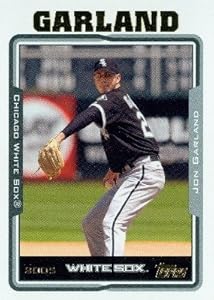
CLEVELAND sends Jon Garland to ARIZONA for Mark Gardner

This deal, featuring a one-for-one swap of starting pitchers, is an easy one to analyze.  Cleveland, as noted in an earlier edition of the TRADE ANALYZER, is in win now mode.  This deal exemplifies that approach.  Mark Gardner comes into the fold.  In the year 2000, he was in the 12th year of a 13 year career, and he had a pretty decent year.  Pitching for the San Francisco Giants, he started 20 games, going 11-7 with a 4.05 ERA.  But he's pretty much done after this year.  In 2001, his ERA balloons to 5.40 and he's out of baseball by 2002.  He comes to Cleveland having gone 4-1 with a 4.40 ERA in eight starts for Arizona.  He will slot in behind Bartolo Colon, Mike Hampton and Freddy Garcia at the back end of the Rock 'N Rollers rotation.


Gardner's Career Statistics:
http://www.baseball-reference.com/players/g/gardnma01.shtml
---------------------------
Jon Garland goes to Arizona, and he offers little to nothing this season.  The year 2000 was his rookie season in the big leagues, one which saw him start 13 games for the Chicago White Sox, compiling a 4-8 record with a 6.46 ERA.  He goes to an Apaches squad which will want nothing to do with that type of production.  But the acquisition of Garland has nothing to do with what he can do this season.  Tom made this deal for what Garland can do for the Apaches in the future.  Beginning in 2002, Garland begins a stretch where he starts at least 32 games for nine consecutive seasons.  And while he's no Johan Santana, he no slouch either.  He won double digit games in each of those years.  He was also very consistent.  His highest ERA in that nine year stretch was 4.90.  His average season over the stretch was a record of 13-11 with a 4.25 ERA.

Garland's Career Statistics:  http://www.baseball-reference.com/players/g/garlajo01.shtml
---------------------------
SUMMARY DEAL #2
This deal is the perfect example of one team looking at the year at hand, with the other participant looking towards the future.  In this case, it's an easy one to evaluate for our purposes.  Deals like this go down all the time in real life.  One team trading away a proven commodity to help them win in the current year for unknown prospects with future potential.  The difference here is that we already know the potential of the return player, in this instance Jon Garland.  And while I have no issues with anybody trying to make a push to win games now, this particular deal is a little bit unbalanced for my taste.  I'll explain.

While Gardner will undoubtedly help Brian improve in 2000, he's basically just dealt a pitcher in Garland who is good for 300 plus starts over the course of the next decade.  Gardner has probably 25 starts left, at best, in his MBL career.  If we were talking about somebody like Rick Ankiel, who is exceptional in 2000 before forgetting how to pitch, or even Robert Person, who is very good in 2000 and has a little something left in 2001, then the deal would make a little more sense.  Even somebody like Mike Sirotka maybe.  I just don't think the addition of a one year back-end guy like Gardner is worth the future success of a guy like Garland.  So while in 2000 the deal clearly favors Brian and the Rock 'N Rollers, the Apaches are the big winners of this deal in the long run.

**As a side note, Brian has made it known that he once had a sales rep named Jon Garland that he could not stand.  I knew a guy once named Mark Gardner and he was a really nice guy.  So in the game of life, Brian comes out on top!**

------------------------------------------------------

Now lets's revert our attention back to the first deal of the day, one which saw a couple of catchers exchange teams.

This is another example of Brian trying to win today, and kudos to him for that.  He's trying to put the most competitive team he can on the field that he can.  This deal accomplishes that.  Gone is a draft pick and Paul Lo Duca, who has virtually no value in the current season.  Into the fold is Jason Kendall, who was an All-Star MLB backstop in the year 2000, a season which saw him hit .320 with a .412 OBP and 22 stolen bases from his catcher position.  He's without a doubt one of the top catchers in our current season.  His addition to the lineup, along with recent acquisition Edgardo Alfonzo, give the Rock 'N Rollers one of the best, if not THE best, batting orders in the entire MBL.  Those two join Jason Giambi, Richard Hidalgo, Rich Aurilia, David Justice, Terrance Long and Raul Mondesi in the lineup.  That's pretty scary.

Let's not paint this as Kendall being a one year acquisition though.  That's absolutely not the case.  Kendall is very good for the next several years.  He catches at least 134 games in each of the next nine seasons.  And while his offense drops off in the later half of those years, his next six years see him post a triple slash of .293/.366/.394.  His 2003 and 2004 seasons are exceptionally good.  He's never been a source of power, and he struggles to throw out opposing base-runners, but he's one of the few catchers who excels on the base-paths, providing stolen bases from a position which normally does not.

Kendall comes to Cleveland batting .333/.435/.444 triple slash line.
Jason Kendall's Career Statistics:
http://www.baseball-reference.com/players/k/kendaja01.shtml
---------------------------------
Paul LoDuca played in only 34 games in the year 2000, but he was targeted by Walt and the Millers not for what he does now, but what he does in the future.  LoDuca explodes onto the scene in 2001, batting .320 with 25 homers in 125 games.  His OPS of .917 was the best of his career by far.  He goes on, following the 2001 season, to catch at least 119 games for the next six seasons.  He's was an All-Star for three different teams in four consecutive seasons between 2003-2006.  When comparing him and Kendall during those four years, they are quite comparable.  Kendall plays in 590 games during the four year span, batting .303 with a .745 OPS.  LoDuca plays 546 games, hitting .290 with a .742 OPS.  Kendall gets on base a little more.  LoDuca provides a little more pop.


Paul Lo Duca's Career Statistics:
http://www.baseball-reference.com/players/l/loducpa01.shtml
---------------------------------
The other player moving in this deal is Roberto Hernandez.  This is another player who can help Brian and the Rock 'N Rollers in the current season.  Hernandez was 4-7 with a 3.19 ERA with 32 saves for Tampa Bay in 2000.  He has six more productive years, compiling a 3.82 ERA for five different teams between 2001-2006.  His main value in this deal is in the 2000 season though, where he provides a quality arm for the Cleveland bullpen.

He comes to the Rock 'N Rollers having compiled a 2.95 ERA in 21.1 innings for the Millers.
Roberto Hernandez's Career Statistics:
http://www.baseball-reference.com/players/h/hernaro01.shtml
----------------------------------------
SUMMARY DEAL #1
Walt looks to be in full rebuild mode with this deal.  He's basically traded away one of his better lineup pieces, as well as a solid bullpen arm, for two future pieces.  And while I have no problem with that strategy, I'm not sure the return for Kendall's current card was enough.  We are playing in the now, and as was seen by Brian's other deal, as well as others, current pieces can pull quite a haul from team's trying to win today.  In Kendall, Walt had arguably the best catcher in the league in 2000.  He trailed only Mike Piazza and Jorge Posada in OPS, and if you factor in his defense and base-running ability, a case can be made he out-values both of them.  Regardless, he's in the top-3, and at a position that very few players standout.  While I like the acquisition of Lo Duca, and what he provides the Miller's in 2001, he's pretty comparable to Kendall in the seasons that follow.  If we consider the Kendall for LoDuca swap as equal, and the Hernandez for a 2nd round pick equal, the deal is pretty even overall.  But I just think Walt could have squeezed a bigger deal out of somebody looking to add Kendall's bat to their 2000 lineup.

Having said that, Walt has his team positioned to be a big mover in 2001.  He's almost certainly going to be adding a superstar player from the draft (Pujols, Ichiro, Sabathia, Oswalt).  And he is now sitting on not only Lo Duca and his breakout season, but also Alfonso Soriano, Juan Pierre and Aubrey Huff.  Not to mention Aramis Ramirez, who will be in his first full season, as well as established regulars Derek Jeter and Jeromy Burnitz.  Matt Morris is also set to join his rotation.  Minnesota will no doubt be much improved in 2001.